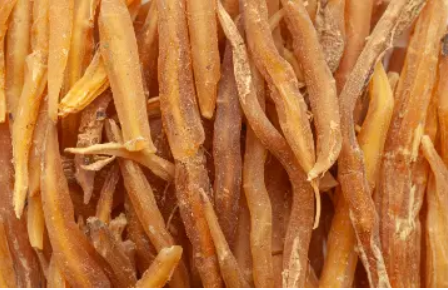
The dried ginger extract contains mono- and sesquiterpenes.
The main antioxidant principles are the gingerols and shogaols and related phenolic ketone derivatives. Ginger can scavenge
superoxide anion and hydroxyl radicals. Gingerol has been shown to inhibit platelet function by blocking thromboxane formation
and ginger was also suggested to interfere with the inflammation processes. Further, ginger acts as a hypolipidemic agent.
Feeding rats with ginger significantly elevated the activity of hepatic cholesterol-7a-hydroxylase, the rate-limiting enzyme in
bile acid biosynthesis, resulting in the elimination of cholesterol from the body
Nausea and Vomiting: The aromatic, spasmolytic, carminative and absorbent properties of ginger suggest
that it has direct effect on the gastrointestinal tract. The notion that ginger may be effective in nausea and vomiting is
supported by several lines of evidence. Animal experiments suggest that ginger has antiemetic activity when naausea is induced
by cisplatin or cyclophosphamide. Studies in healthy human volunteers suggest that ginger reduces experimentally induced nausea.
Six rigorously controlled clinical studies have been published relating to four different clinical conditions: sea sickness,
morning sickness, chemotherapy induced nausea and postoperaive nausea. Majority of these studies reported that ginger powder
1 g daily alleviated clinical nausea of diverse causes
Nausea and vomiting are the most common symptoms experienced in early pregnancy, with nausea affecting
between 70 and 85% of women. This is one of the well-researched pharmacological properties of ginger and a number of clinical
studies exist. Conventional antiemetics are burdened with the potential of teratogenic effects during the critical embryogenic
period of pregnancy. There were no spontaneous or case reports of adverse events during ginger treatment in pregnancy, based on
published randomized clinical trials. Applied in daily doses up to 6 g ginger seems to be a drug with few side effects.
Inflammation: Ginger has a long history of medicinal use as an anti-inflammatory agent for a wide
variety of diseases such as arthritis. Suppression of inflammation in arthritis is attributed to suppression of proinflammatory
cytokines and chemokines produced by synoviocytes, chondrocytes, and leukocytes. Ginger has been shown to inhibit chemokine
production. In one study, 56 patients (28 with rheumatoid arthritis, 18 with osteoarthritis and 10 with muscular discomfort) used
powdered ginger against their afflictions. Amongst the arthritis patients more than three-quarters experienced, to varying degrees,
relief in pain and swelling. All the patients with muscular discomfort experienced relief in pain. None of the patients reported
adverse effects during the period of ginger consumption which ranged from 3 months to 2.5 years.
The activation of nuclear transcription factor kappaB (NF?B) has now been linked with a variety of
inflammatory diseases, including cancer, atherosclerosis, myocardial infarction, diabetes, allergy, asthma, arthritis,
Crohn's disease, multiple sclerosis, Alzheimer's disease, osteoporosis, psoriasis, septic shock, and AIDS. NF?B is one of the
essential transcription factors responsible for COX-2 induction. [6]-Gingerol has been shown to suppress NF?B DNA binding
activity in mouse skin
A recent study suggests that ginger extract may be useful in delaying the onset and progression of
neurodegenerative disorders involving chronically activated microglial cells in the central nervous system. Activated microglial
cells express proinflammatory cytokines, chemokines and neurotoxic mediators. Long term activation of microglial cells is thought
to contribute to the neuron loss in Alzheimer's disease. Ginger extract inhibited the expression of a wide range of
inflammation-related genes.
Dyslipidemia:
Ginger has shown protective effect in experimentally induced atherosclerosis in rabbits. There was distinct
decrease in lipid peroxidation and enhancement of fibrinolytic activity in ginger treated animals. Administration of 50 gm of fat
to healthy adult human volunteers decreased fibrinolytic activity from a mean of 64.20 +/- 5.31 to 52.10 +/- 3.20 units (P < 0.001).
Supplementation of 5 gm of ginger powder with fatty meal not only prevented the fall in fibrinolytic activity but actually increased
it significantly (P < 0.001). Ginger extract reduced plasma cholesterol, inhibited LDL oxidation and attenuated development of
atherosclerosis in atherosclerotic, apolipoprotein E-deficient mice.
Ginger is especially useful in correcting dyslipidemia associated with diabetes. A recent pilot study to
assess the potential of ginger diabetic dyslipidemia, ethanolic extract of ginger (200 mg.kg) was fed to diabetic rats for 20 days.
The treatment lowered serum total cholesterol, triglycerides and increased HDL cholesterol. The results were comparable to
gliclazide (25 mg/kg), a standard antihyperglycemic agent. The study indicated that ginger extract can protect the tissues from
lipid peroxidation.
Diabetes: Hyperglycemia and hypoinsulinemia induced by 5-hydroxytryptamine was significantly reduced
by ginger juice. The treatment also reduced serum cholesterol, triglycerides and blood pressure in diabetic rats.
Cancer: Hot water extract of ginger (0.125%) in drinking water prevented spontaneous mammary
tumorigenesis in SHN virgin mice. Ginger was also shown anti-tumor-promoting activity in a mouse skin carcinogenesis model by
inhibiting induced ornithine decarboxylase, cyclooxygenase and lipoxygenase by tumor promoters. Topical application of [6]-gingerol
or [6]-paradol 30 min prior to 12-O-tetradecanoyl-phorbol-13-acetate (TPA) attenuated the skin papillomagenesis initiated
by 7,12-dimethylbenz[a]anthracene in female ICR mice. These substances also significantly inhibited the tumor-promoter-stimulated
inflammation, TNF-alpha production, and activation of epidermal ornithine decarboxylase in mice. [6]-Gingerol was also shown to
induce apoptosis in human leukemic HL-60 cells. Galanols A and B, also ginger components, are potent apoptosis inducers in
human T lymphoma jurkat cells.
DISCLAIMER:
|